From Feedback to Product: Refining the Experience
- Tamar Sasi
- May 6
- 3 min read

This week, our focus shifted from testing the concept to refining the product itself.
After running a few rounds of validation on the digital prototype, we returned to the app with one main goal: to improve clarity, flow, and the overall user experience based on what we observed in real interactions.
Improving the Experience Through Small but Critical Changes
We focused on targeted improvements that directly address the friction points we identified in the iteration.
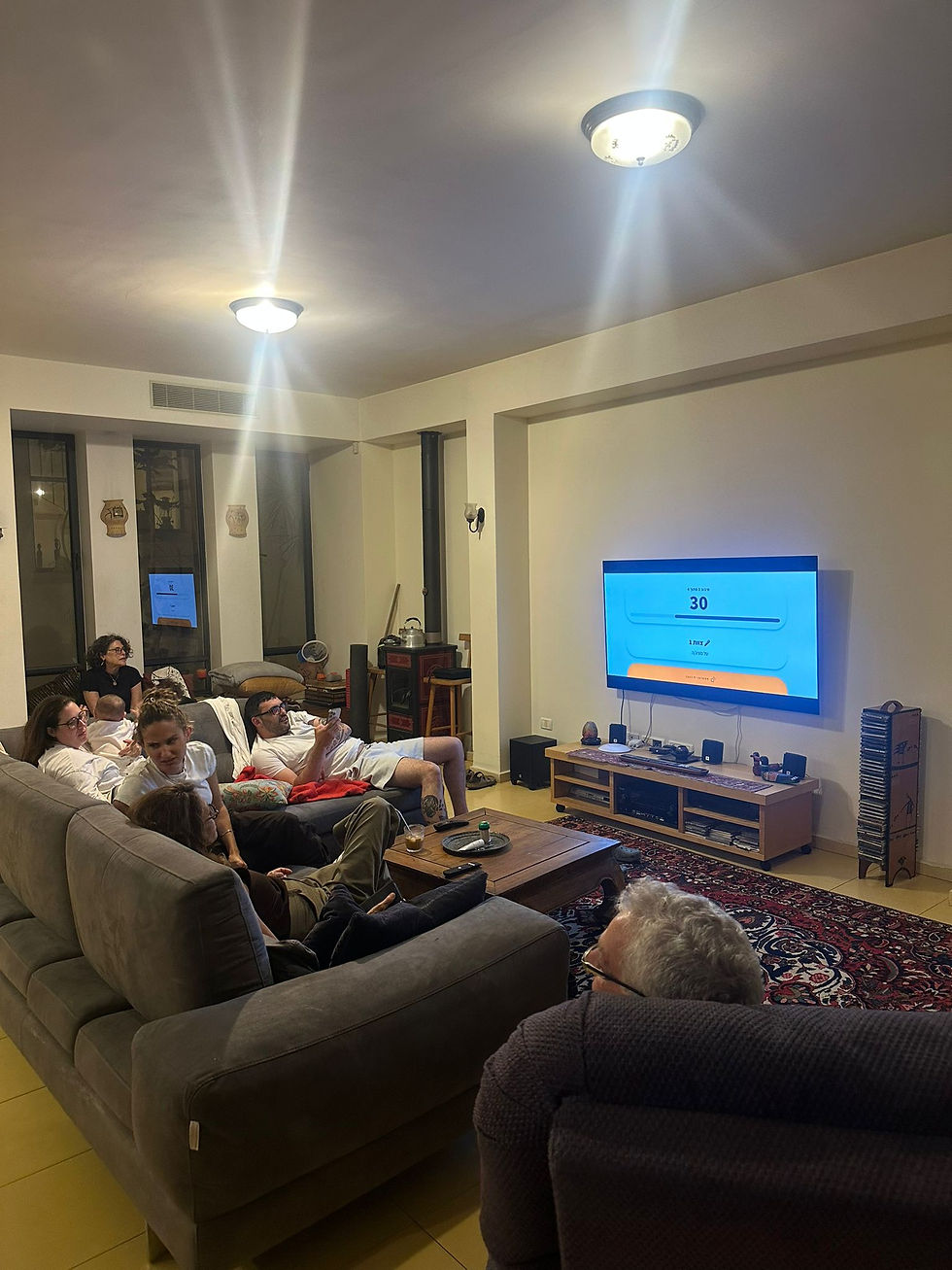
First, we strengthened the connection between the phone and the TV. We clarified how information is presented across both devices, making it easier for players to understand their role in the game and how the experience flows between screens.
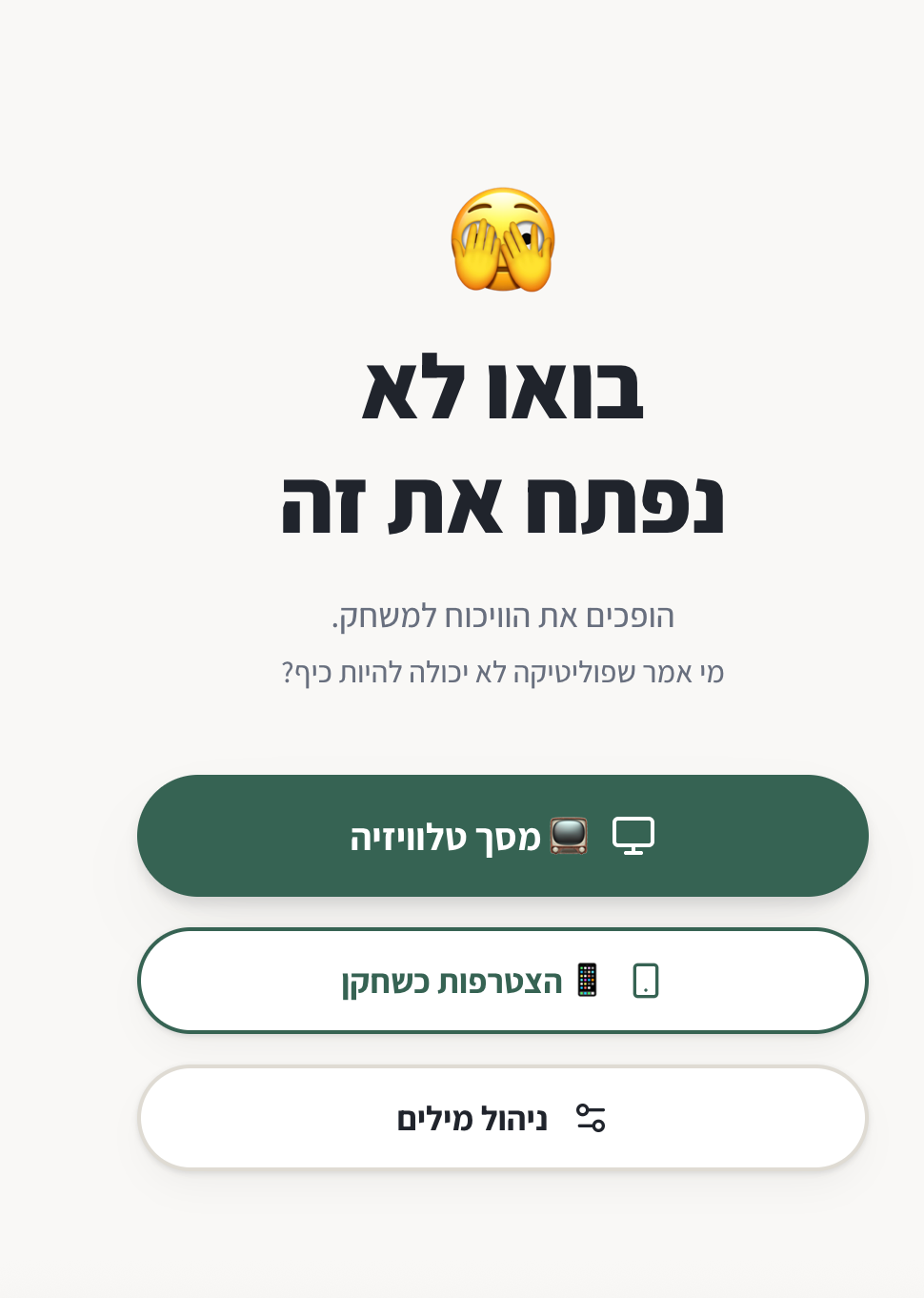
We added a dedicated instructions button on the home screen, allowing users to quickly understand how the game works before starting. This directly addresses one of the main challenges we identified in testing uncertainty during the first interaction and helps create a smoother onboarding experience.
We also introduced an optional random team allocation feature, allowing players to be automatically grouped if they choose. This helps remove unnecessary friction at the beginning, while still giving users the flexibility to create teams manually when needed.
To further support clarity, we redesigned team identity. Each team is now visually represented by a distinct color, and players are clearly informed which team they belong to. This small change significantly improved orientation and reduced confusion in group settings.
On the TV screen, we simplified the scoring system by removing duplicate score displays. This helped clean up the interface and made it easier to follow the game in real time.
We also made several microcopy adjustments across the product. For example, we replaced technical or unclear terms like “TV screen” with more intuitive language such as “Game Board,” and refined button labels to better guide users through the experience especially in preparation for the next validation round.
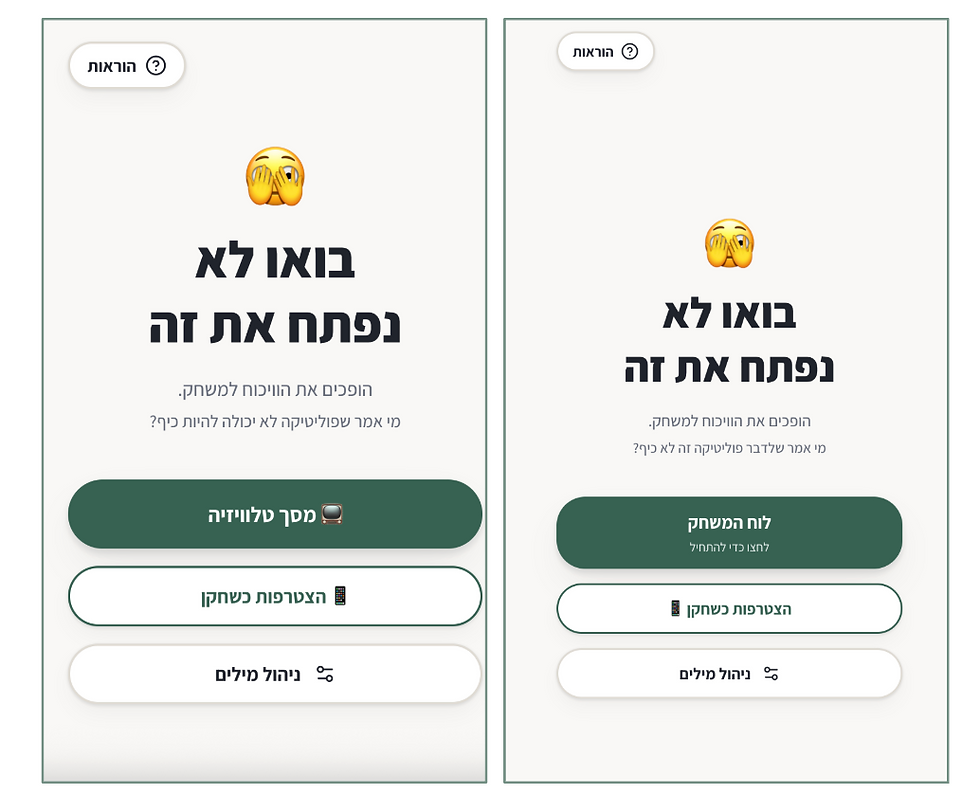
In addition, we introduced a dedicated victory screen on the TV, giving the end of each round a clear and satisfying closure. This helped reinforce the game structure and added a stronger sense of reward.

Finally, we expanded the experience to support more than two teams, allowing for greater flexibility and making the game more suitable for larger social groups.
What This Means for the Product
These changes may seem small individually, but together they represent a shift from a working prototype to a more complete and intentional experience.
We are no longer just asking“Does the idea work?", We are asking: Does it feel smooth? Does it feel clear? Does it feel natural in a social setting?
This is where product thinking begins to take shape.
Thinking Beyond the Game: Planning the Product Video
Alongside product improvements, we also began working on the final product video that will present our project at the end of the semester.
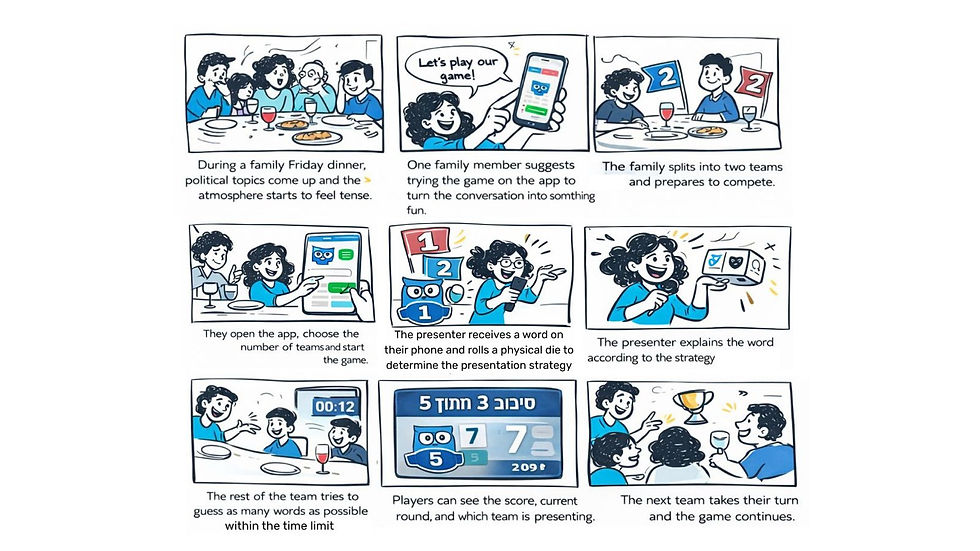
We developed a full script and storyboard that captures not just how the game works, but why it matters.
As described in our script, the video opens with a familiar scene: a Friday night dinner where a political topic creates tension and silence. Instead of arguing, people withdraw, not because they don’t care, but because the relationship matters more.
From there, the video introduces our solution as a shift:a way to turn avoided conversations into a shared, playful experience.
The structure of the video mirrors the product itself: moving from tension, to curiosity, to engagement, and finally to connection.
Working on the video forced us to articulate our value proposition in the simplest possible way: not what the game does but what it changes.
Looking Ahead
This week helped us move one step closer to a real product.
We now have:
A clearer and more intuitive user experience
A smoother onboarding process
A more polished and complete game flow
And a strong narrative that explains why this product matters
Next week, we’ll continue testing the improved version, validating these changes, and refining the experience even further as we prepare for the final stages of the project.


Comments