From Prototype to Reality: Testing Our First Digital Experience
- Tamar Sasi
- Apr 26
- 3 min read

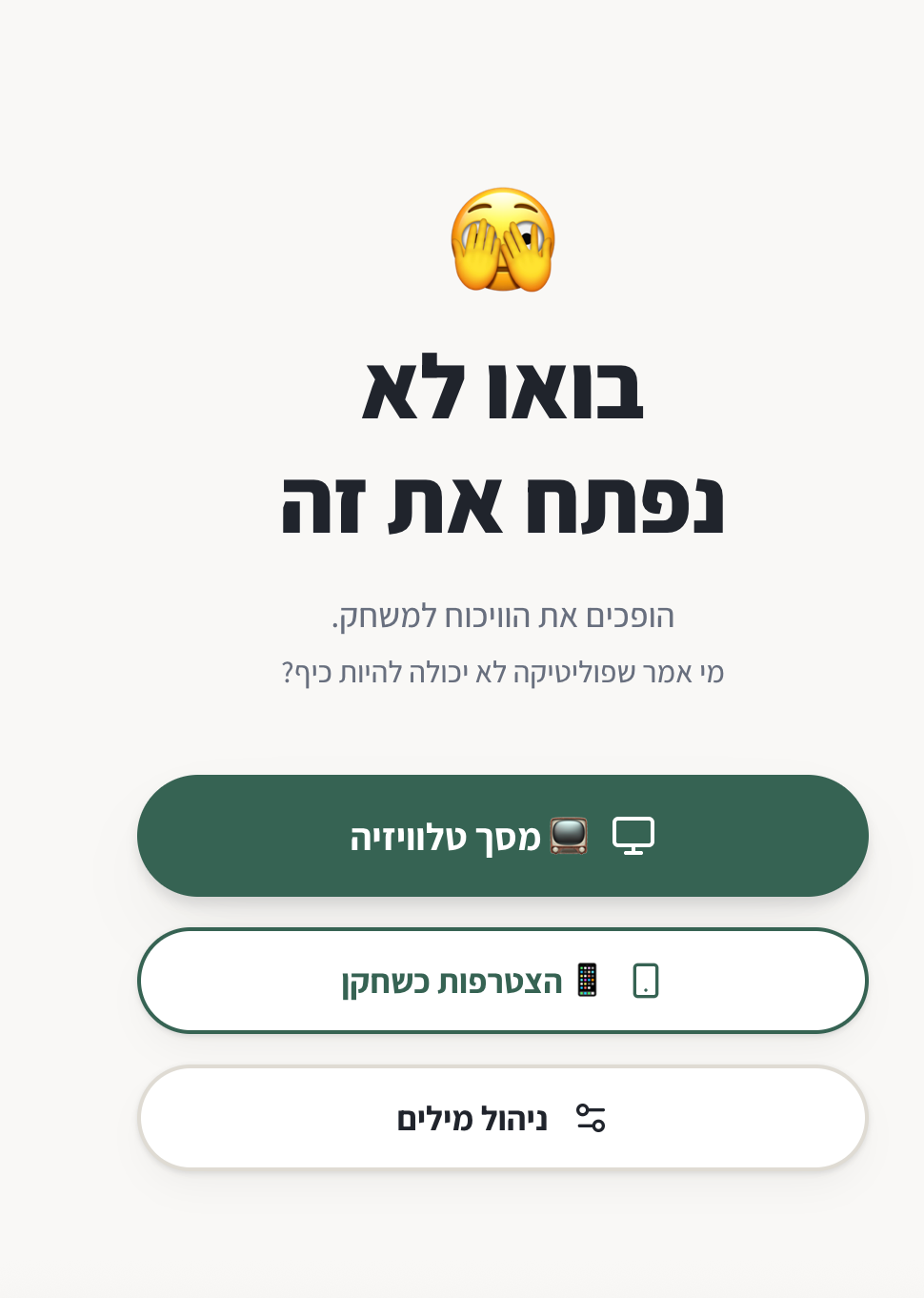
This week, we took a major step forward in our process: moving from a conceptual idea into a working digital prototype.
After weeks of research, analog testing, and refinement, we built our first interactive version of the game using Lovable. The goal was not to perfect the design, but to understand whether the core experience actually works when people interact with it in real life.
Testing the Prototype With Real Users
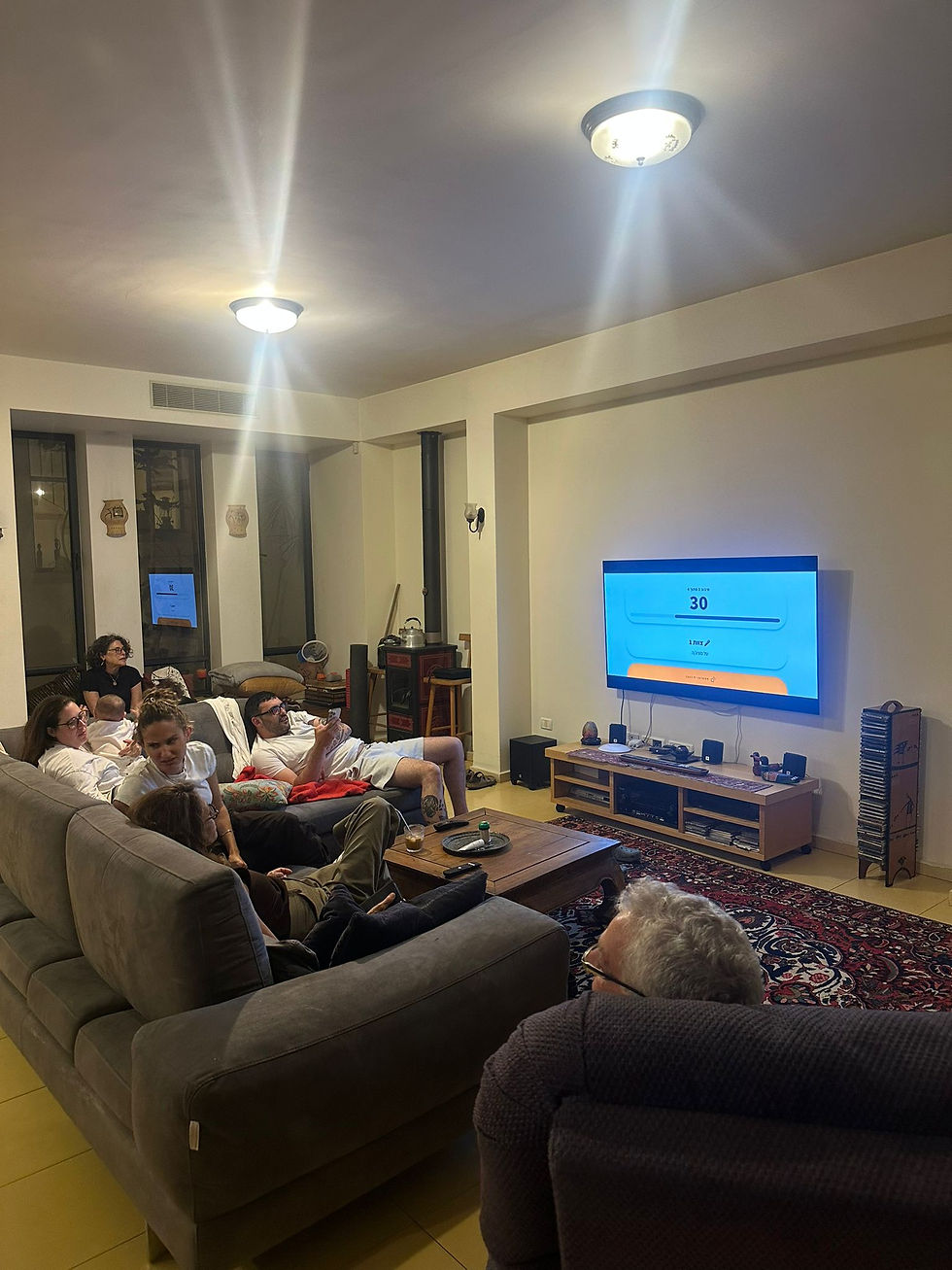
We tested the prototype with both friends and family, using a structured usability protocol that focused on first-time interaction.
Our testing goals were clear: Can users start the game without guidance? Can they complete a full round independently? And does the experience feel intuitive from the very first interaction?
We conducted two separate test sessions with different groups, and observed 12 participants in total in a controlled setting, guided by a facilitator.
What We Saw: First Impressions Matter
One of the strongest insights was that the main challenge appeared at the very beginning.
Participants often hesitated during onboarding:
They were unsure whether to join or create a game
It wasn’t clear who should start
Some didn’t fully understand the relationship between the phone and the TV
As one participant said:“I wasn’t sure if I needed to join or create a game.”Another asked:“Whose turn is it now?”
These moments showed us that even small uncertainties can create friction especially in a social setting where people don’t want to “get it wrong.”
But Then Something Shifted
Despite the initial confusion, something interesting happened.
Once participants completed one full round, the experience became significantly clearer.Players quickly adapted, the flow became natural, and the interaction started to feel intuitive and even fun.
Some participants described it as:“It became clear after one round”or “The interface is simple you just need to start playing.”
This reinforced a critical insight: The problem is not the game itself, it’s the entry point.
What Worked Well
The core mechanics of the experience proved to be strong.
Participants were able to:
Understand the rules after minimal exposure
Engage naturally with the gameplay
Transition into a more relaxed and playful interaction
The structure of turn-taking, time pressure, and role-based presentation helped reduce overthinking and made participation easier.
Once inside the experience, users didn’t need guidance anymore they simply played.
Where the Experience Breaks
At the same time, the testing revealed clear friction points.
The biggest challenges were:
Lack of clarity in onboarding
Unclear first action
Confusion around roles (TV vs. phone)
As summarized in our findings, the difficulty was not in playing but in getting started.
This is a crucial distinction, because it means we are not facing a fundamental product problem, but a design communication problem.
What We Learned
This week helped us sharpen our understanding of where the real design challenge lies.
We learned that:
First-time experience must be extremely guided
Social products cannot rely on trial-and-error onboarding
Clarity and confidence are critical before interaction begins
Most importantly, we realized that in social contexts, hesitation spreads quickly.If one person is confused, the whole group feels it.
From Insight to Action
Based on these findings, we identified clear opportunities for improvement:
A short, visual demo at the beginning
Clear guidance for the first action
Stronger distinction between screen roles (TV vs. phone)
These changes are small in scope but critical in impact.
Looking Ahead
The experience works. People understand it, enjoy it, and engage with it once they get into it.
Now, our focus is on making that entry point seamless.
Next week, we’ll refine the onboarding, improve clarity, and continue testing and bringing the experience one step closer to something that feels natural from the very first moment.



Comments