Week 6: Empathy Map + Competition Analysis
- Tamar Sasi
- Dec 3, 2025
- 3 min read

How Might We… Help Students Develop Emotional Tools for Difficult Conversations?
This week, we reached an important milestone in our process.After several rounds of interviews, insights, and refinement, we officially defined our How Might We question:
How might we help students develop emotional tools and conversational skills, so they won’t avoid difficult or charged conversations?
With this question guiding us, we continued exploring our users, their challenges, and the landscape of existing solutions.
Understanding Our User Through an Empathy Map
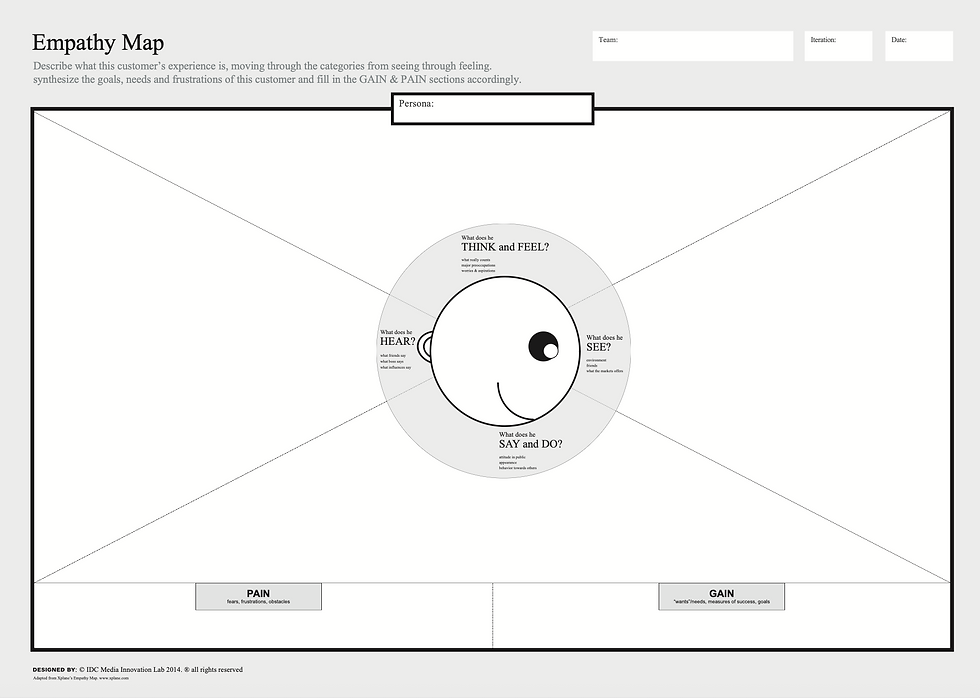
To deepen our understanding of the students we’re designing for, we created an empathy map that captures their thoughts, fears, motivations, and behaviors.According to our map, our target user is a student who cares about social issues but avoids sensitive conversations due to emotional overload, fear of judgment, and lack of confidence in their ability to handle conflict.
They think things like “I’m scared to say something that will be misunderstood” and “I don’t have the tools to manage this without hurting someone.”They see polarized online spaces, hear warnings from friends like “Don’t go there, it’ll only make things worse,” and behave cautiously in class often choosing silence over potential discomfort.
Their core pain is clear: they want to take part in meaningful conversations, but the emotional and social risks feel too high.And their core gain is equally clear:they want skills, confidence, and a sense of safety when talking about difficult topics.
What Students Do Today Instead of Talking
We also looked at “substitute behaviors” what students currently do when faced with a charged conversation.According to our analysis:
They avoid the conversation entirely
They stick only to people who think like them
They stop the conversation at the first sign of emotional intensity
They keep things “neutral” to stay safe
They move the topic quickly to avoid conflict
These behaviors protect them emotionally, but also reinforce loneliness, reduce learning, and shrink their opportunities to understand others.
This helped us refine what our solution needs to enable:not just safer conversations, but safer internal experience before and during the conversation.
Mapping the Landscape: Competitors and Alternatives
This week we also focused on the competitive landscape — not just digital products, but programs, tools, and social practices that aim to support dialogue, emotional regulation, or structured conversation.
We mapped two categories:
1. Dialogue & Bridge-Building Programs
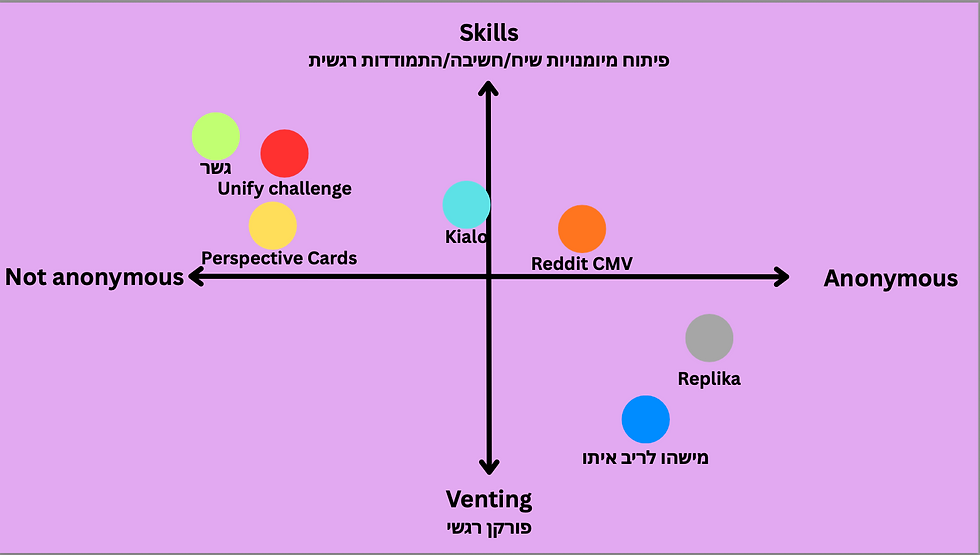
Programs like Gesher and Unify Challenge create structured environments for respectful conversation between people with different perspectives. These solutions emphasize empathy-building, exposure to diversity, and real-time guided conversation.From our analysis (Homework 4, competitor section) , these programs provide inspiration, but they rely on external facilitation and do not equip students with independent emotional tools they can use anywhere.
2. Conversational Tools & Frameworks
Platforms such as Perspective Cards, Kialo, or the Reddit Change My View community help structure arguments, visualize viewpoints, or practice respectful disagreement.AI-based tools like Replika allow users to rehearse emotional conversations privately.These tools offer structure and practice, but do not address the emotional fear and self-silencing we identified in our interviews.
Across all categories, we saw a clear pattern: Most existing solutions support the conversation itself, but not the student’s emotional readiness going into it.
This gap is exactly where our HMW question sits.
Taking the Next Step in the Double Diamond
With a clear HMW question, an empathy map, and a deeper understanding of the alternatives in the market, we are now fully inside the DEFINE phase of the Double Diamond.
We know who we’re designing for.
We know what they struggle with emotionally.
And we know what is missing in the current landscape of solutions.
Next week, we’ll enter the early stages of ideation, beginning to explore the first directions for interventions, tools, or experiences that could help students build emotional capacity and confidence for healthy, meaningful dialogue.


Comments